Selling a house is easier to manage when you follow the process in the right order. Start by checking your finances, getting a fair valuation, preparing your paperwork, choosing how to sell, reviewing offers, and then working with your solicitor or conveyancer until exchange and completion. For a first time seller, the legal stages can feel new, but each part has a clear purpose.
Most sellers in England should expect the process to take several months, especially if there is a property chain involved. A chain means your sale depends on other people buying or selling at the same time. The official GOV.UK guidance on selling a home explains that selling can take around five months on average, although some sales move faster and others take longer.
Pennine Investments works closely with property owners, landlords, sellers and investors across the UK, with strong practical knowledge of the North West market. We help sellers understand their options, spot common risks early, and make calmer decisions from valuation through to completion.
Before You Sell A House
Before you put your house on the market, take time to work out why you are selling, what you need from the sale, and whether your timing is realistic. Some sellers need speed, some want the best possible price, and others want a balance of price, certainty and low stress.
Your reason for selling matters. You may be moving for more space, downsizing, selling an inherited property, or releasing money from a buy to let. Each situation affects how quickly you need to move, how flexible you can be on price, and how much risk you are willing to accept during the sale.
Start by checking your mortgage balance, any early repayment charges, and whether there are secured loans against the property. If the house is not your main home, you may also need to think about Capital Gains Tax, so it is worth speaking to a tax adviser if you are unsure. You should also budget for estate agent fees, solicitor or conveyancer fees, removal costs, an Energy Performance Certificate if you need one, and smaller moving costs that can appear at the worst time.
It is also important to understand what you will actually keep after the sale. A simple way to work this out is to take your likely sale price, then subtract your outstanding mortgage, selling costs, legal fees and moving expenses. If your mortgage is higher than your expected sale price, this is called negative equity. In that situation, speak to your lender before making any firm plans.
How To Sell A House Step By Step
The best way to understand the home selling process in England and Wales is to see it as a set of connected steps. You begin with preparation, move into valuation and marketing, deal with offers, and then let the legal work move the sale towards exchange and completion. You still have jobs to do along the way, but you do not need to know every legal detail yourself.
A typical house selling journey looks like this:
- Check your finances: Confirm your mortgage balance, selling costs, moving budget and any possible tax position.
- Research your property value: Look at recent sold prices in your area and get more than one valuation.
- Gather your paperwork: Find your title details, guarantees, permissions, certificates and leasehold documents if they apply.
- Prepare your home: Tidy, repair clear issues, clean well and make the property easy to view.
- Market the property: Choose your selling route, agree an asking price, prepare photos and launch the listing.
- Review offers: Consider price, buyer position, chain length and whether the buyer has finance arranged.
- Complete the legal work: Your solicitor answers enquiries, deals with contracts and prepares for exchange.
- Exchange and complete: The sale becomes legally binding at exchange, then ownership transfers on completion day.
Getting Your House Valued Properly
A proper house valuation should be based on real market evidence, not guesswork. Look at recent sold prices for similar homes in your postcode, especially properties with the same number of bedrooms, similar condition, garden space and parking. Asking prices can be useful, but sold prices give a better picture of what buyers have actually paid.
If you are selling a house in Manchester or another part of the North West, local demand can change from one street to the next. A well presented terrace near good transport links may attract different buyers from a larger semi detached home on the edge of town. Schools, transport, parking, nearby jobs and local demand can all affect the price.
Getting two or three valuations can help you understand the likely range. Be careful if one valuation is much higher than the others. A high asking price can sound exciting, but it may lead to weak interest if it is not supported by the market.
Your asking price should leave some room for negotiation without putting serious buyers off. If speed matters, a sharper price may create more early interest. If you have time and your property is in a strong position, you might choose a slightly higher starting price, as long as you review viewing feedback honestly.
Choosing How To Sell Your Property
Choosing the right selling route depends on your time, budget, confidence and need for certainty. Most homeowners use an estate agent because the agent can handle marketing, viewings, negotiation and buyer checks. This can be helpful if you are busy, live away from the property, or feel unsure about dealing directly with buyers.
If you use an estate agent, read the agreement before signing. Check the fee, contract length, notice period, sole agency terms, marketing costs and when payment is due. A low fee can be attractive, but service, communication and local knowledge also matter.
You can also sell privately, which may save agency fees, but you will need to handle advertising, enquiries, viewings and negotiation yourself. Auctions can suit some properties, especially where speed is important or the property needs work, but the pricing, fees and completion times can be different from a standard sale.
For owners who need a more direct route, it may also be worth reading about options to sell property fast, especially where timing, certainty or a difficult property situation is the main concern.
Whatever route you choose, make sure you understand the likely price, fees, timescale and level of support. The cheapest option is not always the best if it creates delays or confusion. The most expensive option is not always better either if the service does not match your needs.
Preparing Your Home And Paperwork
Preparing your home and paperwork helps the sale move more smoothly. Buyers want to see a clean, cared for property, and their solicitor will want clear documents before the sale can complete. Good preparation can reduce delays, build trust and make the property easier to market.
On the practical side, clean well, declutter, fix small visible problems and make sure each room has a clear purpose. You do not need to turn your home into a show home, but buyers should be able to see the space without being distracted by boxes, coats or loose cables.
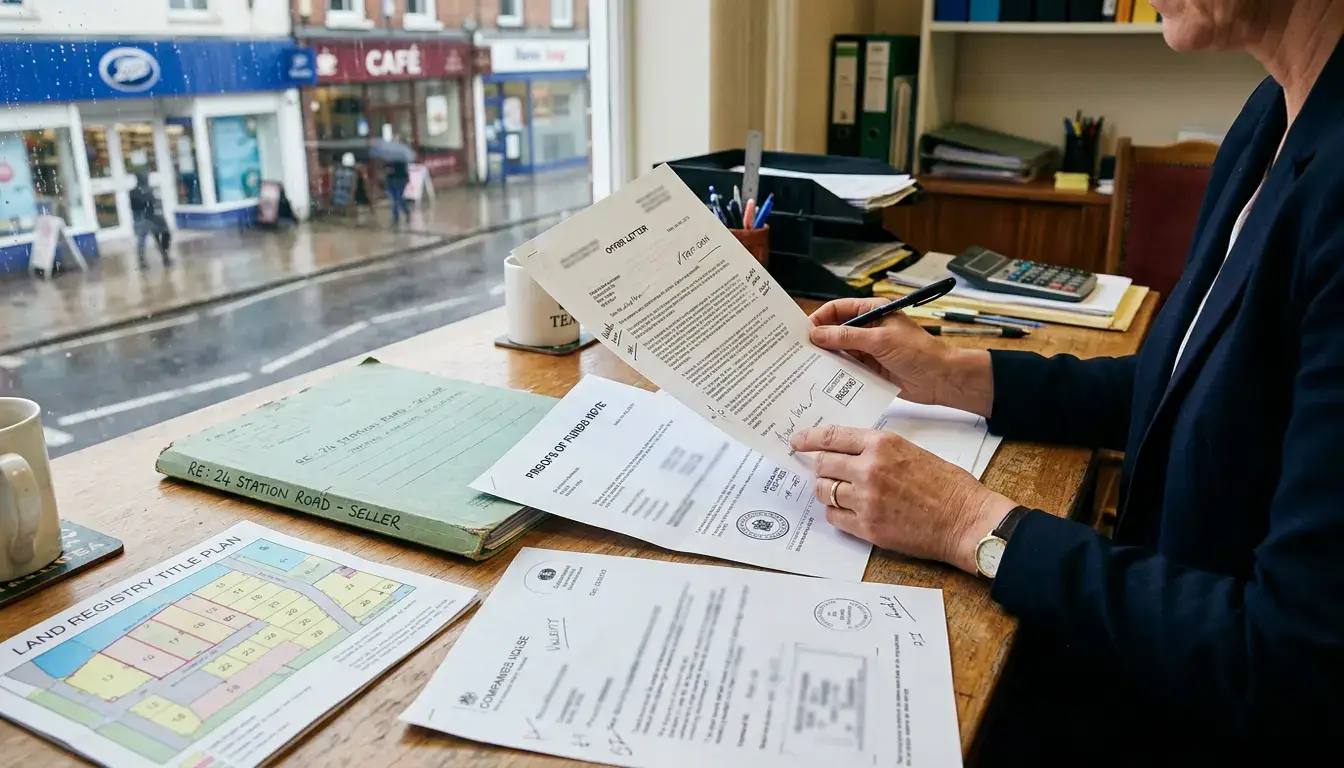
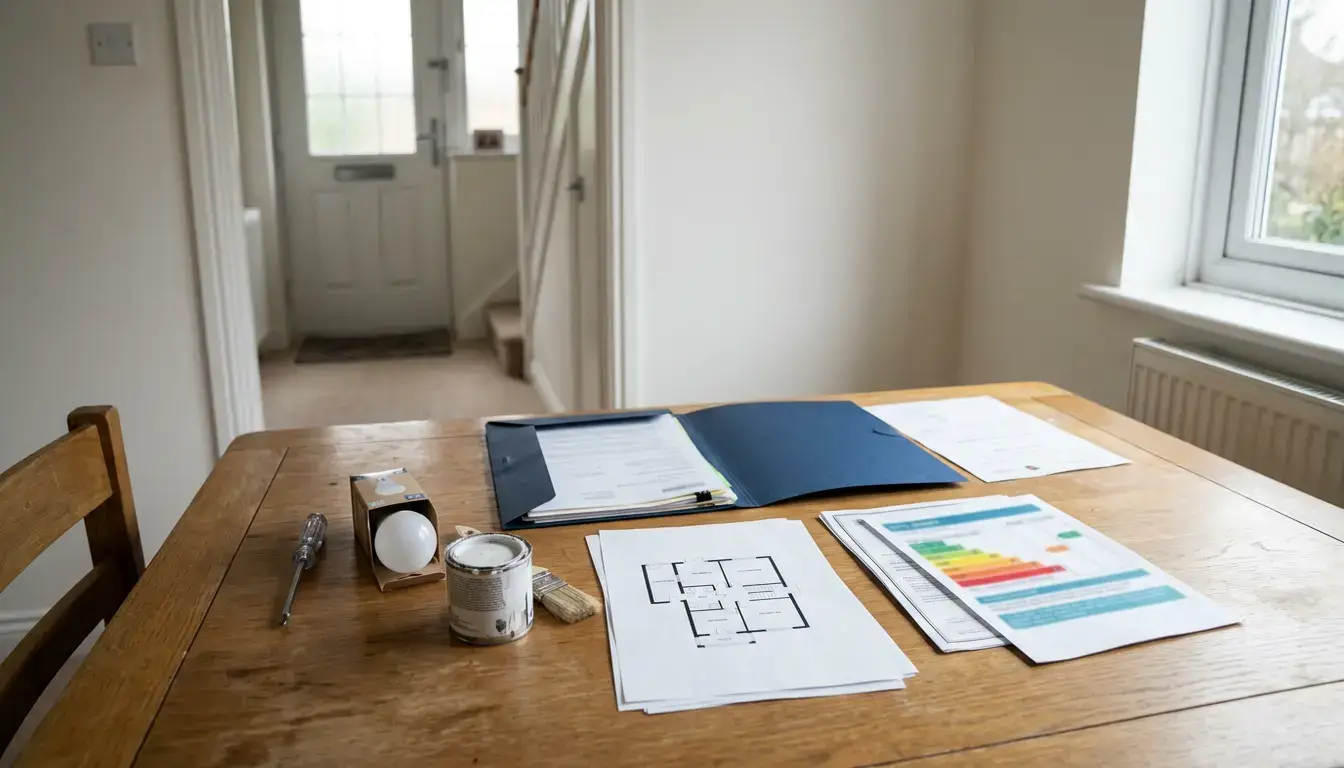
On the paperwork side, collect anything connected to ownership, alterations, guarantees and safety. This can include building regulation approval, planning permission, window certificates, boiler service records, warranties, electrical certificates, party wall agreements and your Energy Performance Certificate. If your property is leasehold, you may need lease details, ground rent information, service charge accounts and management company contact details.
You will usually be asked to complete property information forms. The TA6 form covers things like boundaries, disputes, alterations, parking, utilities, flooding and other details a buyer should know. The TA10 form explains what fixtures and fittings are included, such as curtains, appliances or garden items. For leasehold homes, extra leasehold forms may ask about ground rent, service charges, building insurance and planned major works.
Marketing Your House For Sale
Good marketing helps the right buyers understand your property quickly. A strong listing should be accurate, clear and appealing. Good photos matter because buyers often decide within seconds whether a property is worth viewing. A floorplan is also useful because it shows the layout before someone visits, which can reduce wasted viewings.
The property description should highlight real strengths without hiding important facts. Mention useful features such as parking, gardens, storage, transport links, local schools, recent improvements and flexible living space. It is better to be honest from the start than to create problems later when a buyer, surveyor or solicitor spots something that was left out.
Before each viewing, aim for clean, bright and easy to access. Open curtains, clear surfaces, remove trip hazards and make sure keys work for garages, gardens or outbuildings if they are part of the sale. If you have pets, try to keep the property calm and fresh, because not every buyer will enjoy muddy paws or loud barking during a viewing.
Reviewing Offers On Your House
When offers arrive, look at more than the price. A slightly lower offer from a cash buyer with no chain may be stronger than a higher offer from someone who still needs to sell their own home. The best offer is often the one that gives you the right mix of price, speed and certainty.
Ask whether the buyer has a mortgage agreement in principle, whether they are in a chain, and when they hope to move. If they already have a buyer for their own property, ask how far that sale has progressed. Your estate agent should help check the buyer's position before you make a decision.
Once you accept an offer, the property is often described as sold subject to contract. This means everyone intends to proceed, but the sale is not legally binding yet. The legal work, survey and mortgage checks still need to happen before exchange of contracts.
What Happens After You Accept An Offer
After accepting an offer, your solicitor or conveyancer starts working with the buyer's solicitor. They will prepare the draft contract, send property information forms, answer legal enquiries, deal with title issues, and request a mortgage redemption figure if you have a mortgage to pay off. A mortgage redemption figure is the amount needed to clear your mortgage on completion.
The buyer will usually arrange a survey, and their lender may arrange a mortgage valuation. A survey checks the condition of the property, while a mortgage valuation helps the lender decide whether the property is suitable security for the loan.
Enquiries are normal, so do not panic if questions come back. In this context, enquiries are the buyer's solicitor's questions about the property, the paperwork, or anything that needs clarifying. They may ask about boundaries, guarantees, certificates, building work, lease terms, planning matters or anything unclear in the documents.
If the survey finds issues, the buyer may ask for repairs, further checks or a price reduction. You can agree, negotiate, or refuse, depending on the facts and how much you want to keep the sale moving. This stage can feel uncertain, but delays and questions are common and do not always mean the sale is in trouble.
Exchange of contracts is the point where the sale becomes legally binding. Both sides agree the final contract, the buyer normally pays a deposit, and the completion date is fixed. Completion is the day the money is transferred and the property legally changes hands. Until exchange happens, either side can usually pull out, which is why sellers often feel more relaxed once exchange is confirmed.
Completion Day And Moving Out
Completion is the day the buyer's money is transferred, your mortgage is repaid, fees are settled, and legal ownership passes to the buyer. Your solicitor will handle the money flow and let the estate agent know when keys can be released. You should not hand over keys until completion has been confirmed.
Before leaving, take meter readings and photograph them for your records. Empty the property unless you have agreed otherwise, and leave behind keys, manuals and any agreed fixtures. Make sure the house is reasonably clean and in the condition agreed in the contract.
If you are in a chain, completion timing can depend on money moving through several solicitors. A little patience may be needed on the day, especially if you are waiting for confirmation from more than one legal firm.
After moving, update your council tax, utilities, insurance, bank, driving licence, electoral roll and any regular deliveries. If you are moving within or away from Manchester, remember to tell the local council about your change of address for council tax and electoral registration. It is also sensible to redirect post for a while, as one forgotten letter can create needless admin later.
Staying Safe During The Sale
Property transactions involve large sums of money, so be careful with bank details and emails. Criminals sometimes try to intercept messages and send fake payment instructions. This is known as payment diversion fraud. Always verify bank details by calling your solicitor using a trusted number, not a number from a suspicious email.
You should also keep records of important calls, offers, documents and decisions. If something feels rushed, unclear or unusually pressured, pause and ask questions. A good professional will not mind explaining the process in plain English.
It is also wise to use trusted professionals, read documents before signing, and avoid sending money until you are fully sure the request is genuine. If you are ever unsure, stop and check. A short delay is far better than sending money to the wrong place.
Frequently Asked Questions
How Long Does It Take To Sell A House In The UK?
It often takes several months from deciding to sell to completion, and around five months is a common broad estimate. Chains, surveys, mortgage delays and legal enquiries can all affect the timescale.
What Does Sold Subject To Contract Mean?
Sold subject to contract means an offer has been accepted, but contracts have not yet been exchanged. The sale is not legally binding at that stage, so either side can still withdraw.
Do I Need An EPC To Sell My House?
Most sellers need a valid Energy Performance Certificate before marketing the property. Some properties may be exempt, so check before paying for a new one.
Can I Sell A Leasehold Flat?
Yes, you can sell a leasehold flat, but you will usually need extra documents about the lease, ground rent, service charges and building management. Starting early helps avoid delays once a buyer is found.
What Happens If My Buyer Pulls Out?
If exchange has not happened, the buyer can usually withdraw without legal penalty. You can put the property back on the market, review the feedback, and decide whether to adjust the price or marketing approach.
Do I Need A Solicitor To Sell A House?
Yes, most sellers use a solicitor or licensed conveyancer to handle the legal transfer of ownership. They prepare contracts, answer enquiries, deal with mortgage repayment and help move the sale towards exchange and completion.